
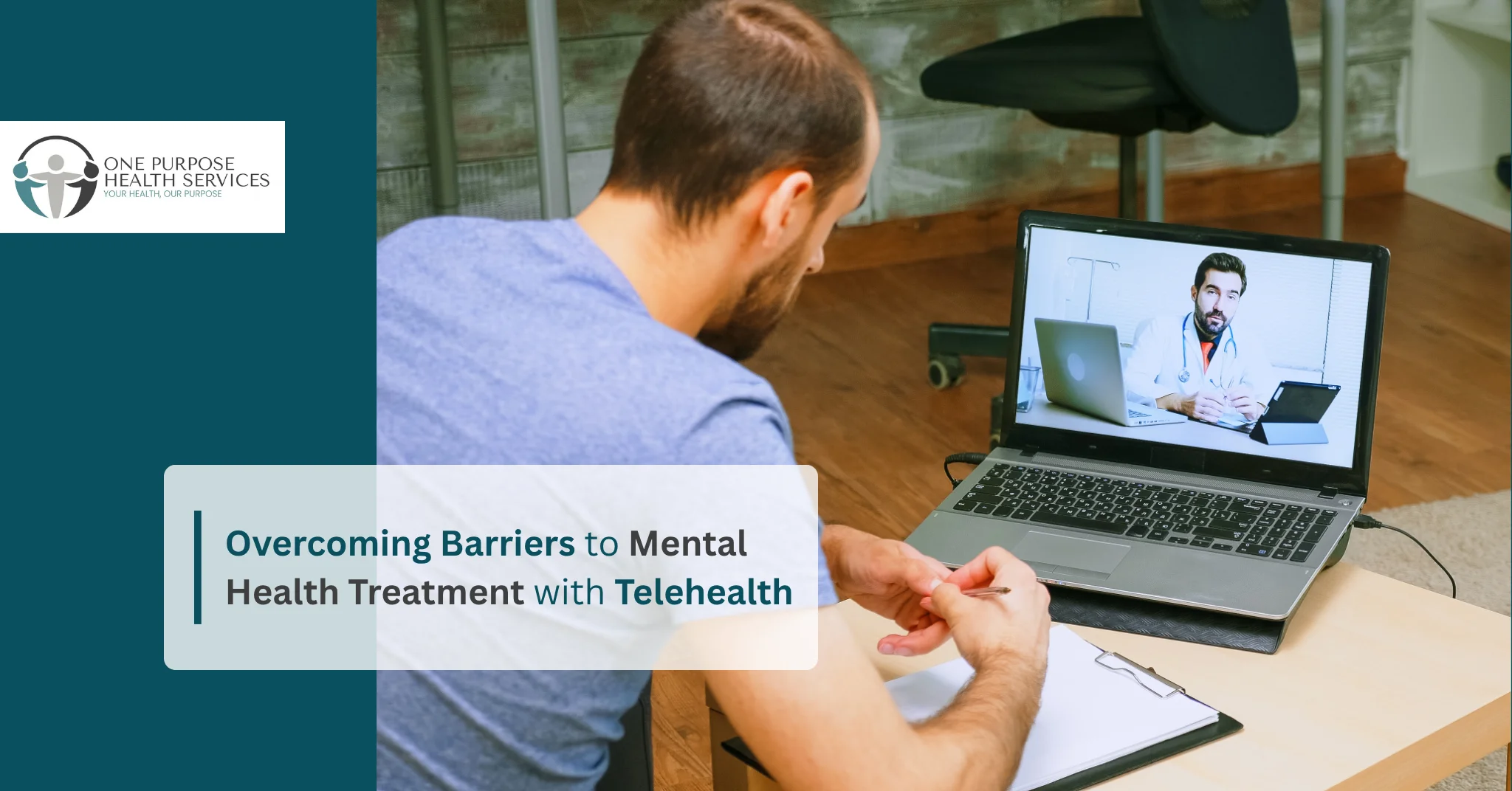
You know you might use some help with your mental health, whether it’s anxiety or depression, questions about medication, or just feeling stuck, but you never quite get around to it. The causes are often practical or emotional or both. Seeking treatment can seem daunting due to long waits for appointments, the trouble of travel, concerns about privacy, expense worries, or the subtle pressure of stigma.
Telehealth has altered that equation. Virtual mental health treatment, including psychiatric examinations and medication management, allows clients to connect with skilled physicians from home.
Common Barriers That Keep People from Mental Health Care
In the United States, access to mental health treatment is defined by a set of overlapping challenges. The first step in working around them is to understand them.
Geographic and transportation challenges
Most towns, especially rural or suburban ones, have a dearth of local providers. Even in cities, the specialist who will take new patients may be a long way away. Transportation challenges, inadequate public transportation, mobility difficulties, or the time and expense of driving can turn a necessary appointment into a major logistical puzzle.
Time, scheduling, and life demands
Work schedules, education, childcare, and everyday duties leave little room for travel and waiting rooms. Taking time off can entail lost pay or costly arrangements for child care. For many, the practical friction is enough to delay or forgo care altogether.
Stigma and privacy concerns
Many are still stopped by fears of being seen going into a mental health office, of others judging them, or of the internal idea that one “should handle this alone.” There’s also another layer of cultural or generational prejudices. It’s normal to want seclusion, particularly when dealing with delicate subjects.
Provider shortages and long waits
Demand for mental health services often outstrips local supply. This can translate into waiting weeks or months for initial assessment or continuing medication treatment, all the while symptoms may worsen.
Cost and insurance navigation
Insurance can be a barrier to getting therapy, from finding in-network providers to knowing what your coverage looks like for psychiatric care to paying the out-of-pocket fees. And the uninsured confront even greater obstacles.
Uncertainty about where to start
If they don’t know what kind of provider to see, how to make an appointment, or what the process is like, people can become stuck before they ever start.
These barriers do not suggest someone is unmotivated or “not ready.” They are actual structural and mental barriers
How Telehealth Helps Overcome These Barriers
Virtual mental health care helps solve many of these obstacles, while offering care that studies repeatedly find to be equivalent to in-person visits for illnesses such as depression, anxiety, and many more.
Removing distance and travel
Secure online visits bring the provider to where you are. This is especially helpful for people living in places where specialists are scarce, people with mobility or transportation issues, or anyone who can’t readily get out of the house. Treatment is also more easily continued when it is not interrupted by relocation or travel.
Fitting care into real life
Often appointments are easier to schedule. Many people complete visits over a lunch break, after the children have gone to bed, or from a private location in their house. Overall, there is less time commitment because there is no commuting time or waiting rooms. This convenience helps with improved attendance and follow-through, which in turn increases treatment effects over time.
Greater privacy and reduced stigma
It can feel less daunting to join a session from a familiar private space than to step into a clinic. For some, this comfort makes talking easier. The lowered visibility of seeking therapy helps to minimize the barrier of stigma without affecting the quality of the professional relationship.
Faster access and ongoing support
Virtual firms often provide more flexible schedule options compared to busy local locations. Once care is initiated, it’s easier to stay on top of follow-ups for medication management or check-ins, but consistency is key for psychiatric medicine, which involves regular check-ins about effectiveness, side effects, and changes.
Supporting a full range of services
Telehealth can be used to carry out full assessments, diagnostic clarity, medication management, and discussions about lifestyle factors that are impacting mental health. Sometimes it is helpful to have a clinical context, and providers can see patients in the setting of their home. In virtual care, you can be just as effective in adding in holistic aspects, such as stress management techniques or wellness activities, as you are in an office setting.
Clinical reviews and professional organizations, including the American Psychiatric Association and the National Institute of Mental Health, have found evidence that well-delivered telepsychiatry results in diagnostic accuracy, treatment effectiveness, and patient satisfaction comparable to traditional care for many common conditions.
Practical Tips for Starting Virtual Mental Health Care
Getting started does not have to feel complicated. A few simple steps help most people feel prepared.
- Choose a private, quiet space where you will not be interrupted. Headphones can add extra privacy.
- Test your technology ahead of time: a reliable internet connection, a charged device (phone, tablet, or computer), and a quiet environment work best. Most platforms are designed to be straightforward.
- Have basic information ready: your medical history, current medications, insurance details, and a list of concerns or questions.
- Treat the appointment like any other medical visit. Dress comfortably, but be ready to focus. Many people find that being in a familiar space actually helps them relax and communicate more openly.
- Ask about the platform’s security features. Reputable practices use HIPAA-compliant systems with encryption to protect your information.
- If technology feels intimidating, start by asking the practice for simple setup guidance. Most providers are accustomed to walking new patients through the process.
For medication management specifically, virtual visits allow for careful discussion of symptoms, side effects, and adjustments, with the same clinical standards applied as in person.
Addressing Privacy, Security, and Quality Concerns
A common question is whether virtual care is truly private and effective. Legitimate telehealth providers follow the same privacy rules that govern in-person care. This includes using encrypted platforms, secure data handling, and compliance with federal regulations that protect health information.
Quality depends on the provider’s expertise and the structure of care, not the screen. Experienced clinicians conduct thorough evaluations, build rapport, develop personalized plans, and monitor progress over time. At One Purpose Health, care is delivered by a nurse practitionerwith extensive clinical experience who focuses on attentive listening, evidence-based medication management, and a holistic view of each person’s needs.
Virtual care is not ideal for every situation; acute crises or certain complex presentations may require in-person or higher levels of support, but for ongoing psychiatric evaluation and medication management, it has proven highly effective for a wide range of people.
Taking the Next Step Toward Care That Fits Your Life
There are actual barriers to mental health treatment, but they don’t have to be forever. Telehealth removes many of the practical and emotional constraints that previously stood in the way, making constant, tailored support more feasible.
If you’ve been avoiding care due to distance, time, stigma, or uncertainty, a virtual appointment can be a low-pressure way to begin. Compassionate caregivers want to know your specific situation and provide a plan that supports stability and well-being.
One Purpose Health provides secure, virtual appointments for psychiatric evaluation, medication management, and holistic assistance suited for real life. One concrete thing you can do to feel more balanced and in control is to reach out.
If you have further questions or are ready to look into treatment options that fit your schedule and situation, a good next step is to schedule an appointment.
FAQs
Is virtual mental health care as effective as in-person visits?
Research indicates that for many common illnesses and medication management, results in symptom improvement, diagnostic accuracy, and patient satisfaction are comparable when treatment is delivered by skilled physicians on the right platforms.
What equipment do I need for a telehealth appointment?
Usually, a smartphone, tablet, or computer with a camera and microphone and a stable internet connection is enough. Most platforms work with a simple browser link or an app.
How private are virtual mental health sessions?
Legitimate practices use encrypted, HIPAA-compliant technology. You choose a private place, so you control your environment, and caregivers follow the same confidentiality rules as in-person care.
What if I am not comfortable with technology?
Most individuals feel that way at first. Most practices include clear guidelines and support to get you connected properly. A simple test call generally gives you confidence quickly.
